Diversity in the Living World - Class 6 Science Chapter 2 NCERT Solutions (PDF · 21 pages · ₹49) Unlock the full PDF for ₹49
Free sample: pages 1 to 3 of 21. The full PDF costs ₹49.
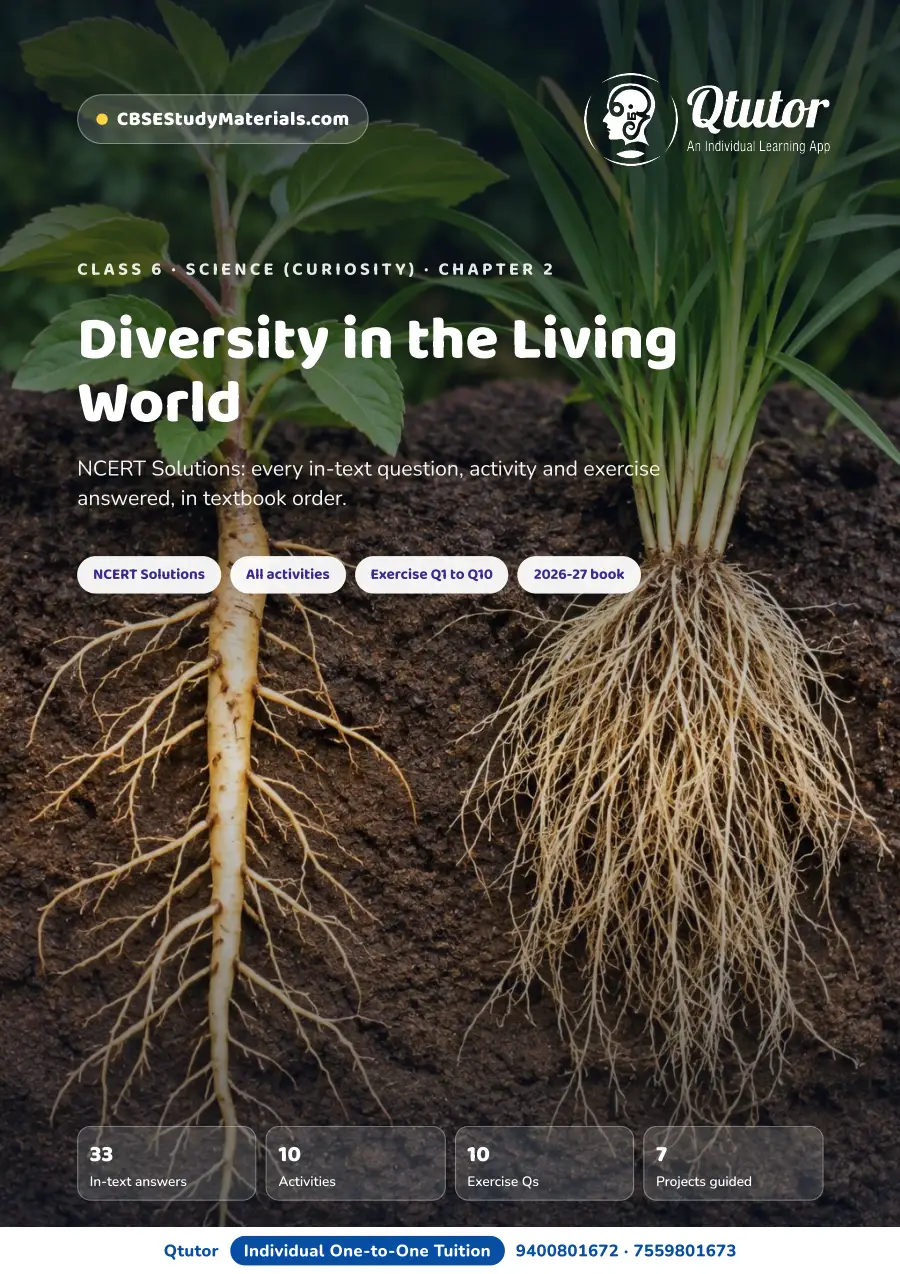
Why does a cold-desert camel in Ladakh have two humps and shorter legs, while the camel of Rajasthan has one hump and long legs with wide hooves? These NCERT Solutions for Diversity in the Living World, Class 6 Science Chapter 2 (CBSE, NCERT Curiosity textbook 2026-27), answer this and every other question in the chapter. This premium 21-page PDF costs ₹49. It is NCERT based study material prepared by our team and is not an official CBSE or NCERT publication.
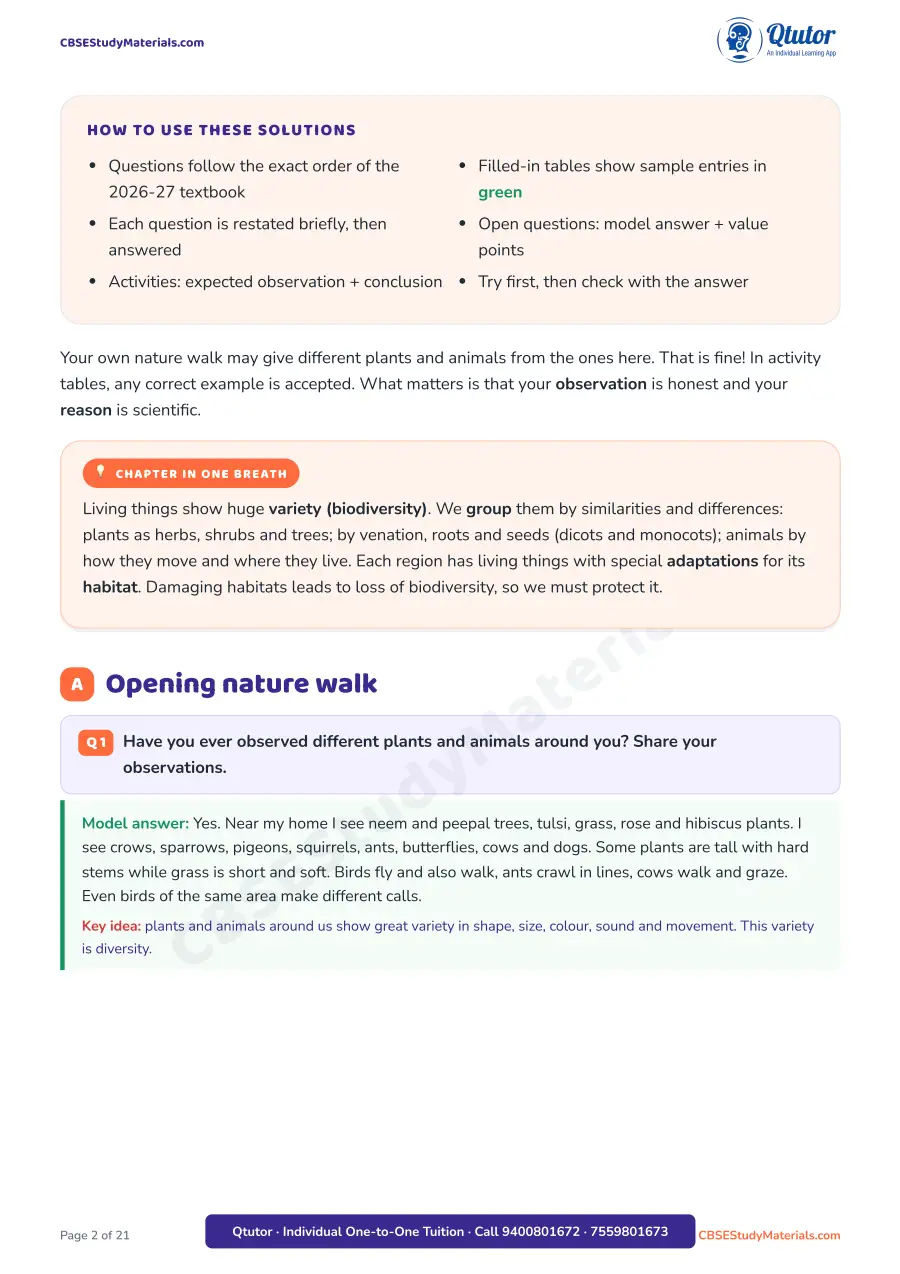
The solutions follow the textbook page by page. Each question is restated briefly and then answered in short, friendly sentences that a Class 6 student can understand, revise from and write in a notebook.
Class 6 Science Chapter 2 Diversity in the Living World NCERT Solutions: What Is Included
- Answers to all 33 in-text questions, tables and tasks, in the same order as the book, from the opening nature walk to the sacred groves box.
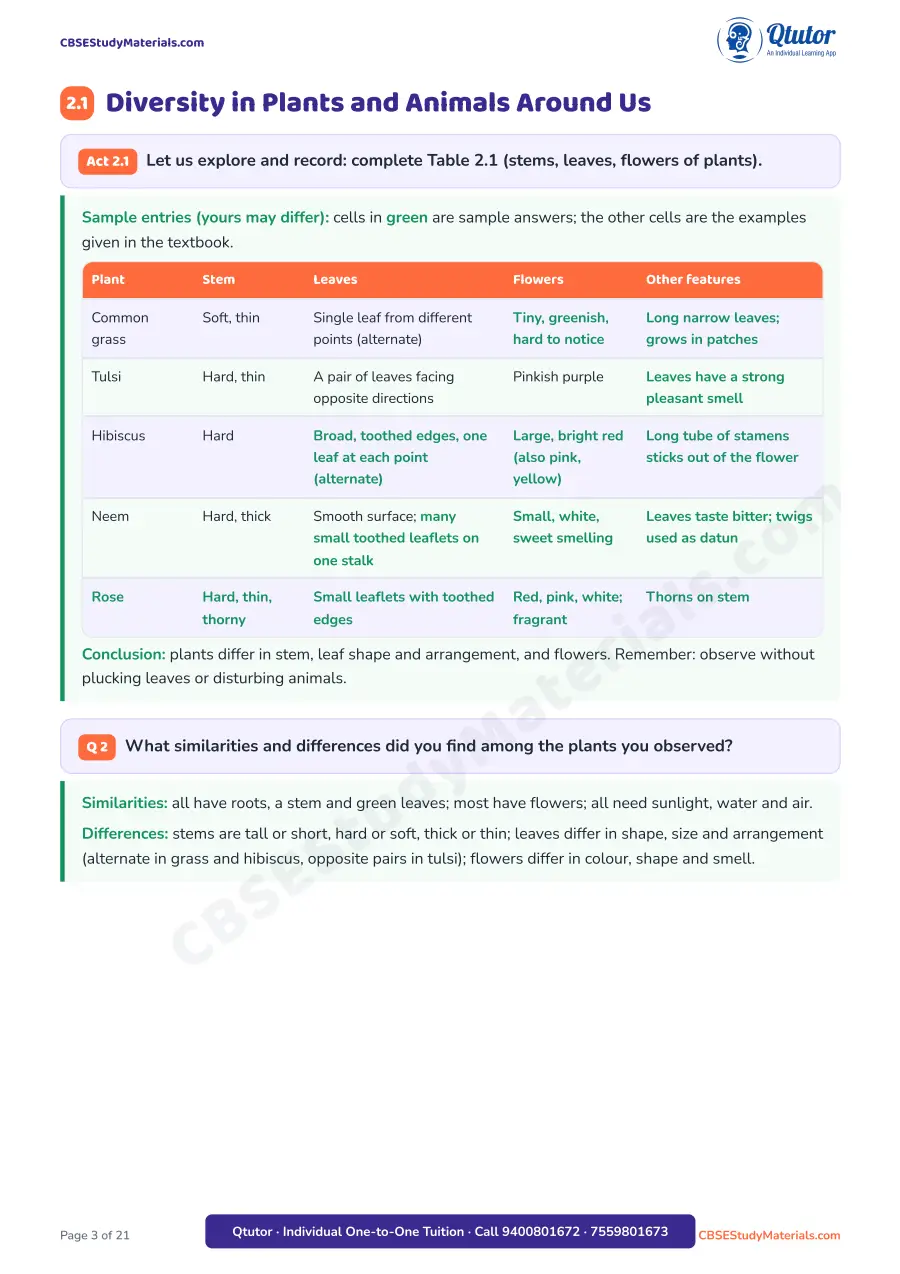
- Solutions to all ten activities: Activity 2.1 (Let us explore and record), 2.2 (Let us appreciate), 2.3 and 2.4 (Let us group), 2.5 (Let us compare), 2.6 (Let us find out), 2.7 (Let us relate and analyse), 2.8 (Let us compare), 2.9 (Let us find out) and 2.10 (Let us compare and analyse). Each gives the expected observation and the conclusion.
- Sample entries for the textbook tables (Tables 2.1 to 2.6), with the filled-in cells shown in green so you can tell them apart from the book's own examples.
- Complete answers to all 10 questions of Let us enhance our learning, with sub-parts, tables and value points for the open questions.
- Planning guides for all seven Learning further projects, including the class biodiversity register and the Project Tiger presentation.
- Original diagrams: reticulate and parallel venation, taproot and fibrous roots, hot and cold desert camels, a Venn diagram for the habitat question and the venation flowchart.
- A "Remember for the exam" recap box.
Structure of the Diversity in the Living World Solutions PDF
| Part | What you get |
|---|---|
| Opening nature walk | First discussion question answered |
| 2.1 Diversity in plants and animals around us | Activities 2.1 and 2.2, Tables 2.1 and 2.2, dependence examples |
| 2.2 How to group plants and animals? | Activity 2.3 and the importance of grouping |
| 2.2.1 How to group plants? | Activities 2.4 to 2.8: herbs, shrubs, trees, venation, roots, dicots and monocots |
| 2.2.2 How to group animals? | Activity 2.9 and Table 2.5 on movement |
| 2.3 Plants and animals in different surroundings | Activity 2.10, cactus, deodar, camels, habitats, habitat loss, sacred groves |
| Let us enhance our learning | Q1 to Q10 with full answers |
| Learning further | Seven project guides |
Diversity in the Living World Class 6 Important Topics
- Biodiversity and how plants and animals depend on each other
- Grouping living things by similarities and differences
- Herbs, shrubs and trees; climbers and creepers
- Reticulate and parallel venation
- Taproot and fibrous root systems
- Dicots and monocots (number of cotyledons) and how they relate to venation and roots
- Grouping animals by movement and body parts used
- Adaptations of cactus, deodar, rhododendron and camels
- Habitat: terrestrial, aquatic and amphibians; habitat loss and conservation (Project Tiger, Cheetah Reintroduction Project, Great Indian Bustard)
Diversity in the Living World Class 6 Important Questions (Sample from the PDF)
Exercise Q1. What differences would you find in the roots and leaf venation of wheat and kidney bean plants?
| Feature | Wheat | Kidney bean |
|---|---|---|
| Seed | One cotyledon (monocot) | Two cotyledons (dicot) |
| Roots | Fibrous | Taproot |
| Leaf venation | Parallel | Reticulate |
Exercise Q3. A radish is a taproot: the thick, white part we eat is the swollen main root. So its leaves show reticulate (net-like) venation.
Exercise Q10. A duck has webbed feet, with its toes joined by skin. It uses them like paddles to push water back and swim. A pigeon's toes are separate, which helps it grip branches.
In-text, camels. The hot-desert camel has one hump and long legs with wide hooves that stop it from sinking into sand. The cold-desert camel has two humps that shrink in late winter, shorter legs for mountain slopes and long hair for the cold.
How These NCERT Solutions Help
- Same order and numbering as the textbook, so you can find any answer quickly while doing homework.
- Activities explained, not just answered: you learn what to observe and what to conclude, which helps in practical work and project files.
- Model answers with value points for open questions such as deforestation (Q6), the mountain goat (Q4) and grouping animals by a new feature (Q5, with two correct ways shown).
- Clear notes on tricky answers, such as where to place the tortoise in the habitat Venn diagram and why.
- Simple, exam-ready language that uses the chapter's key terms: biodiversity, venation, cotyledon, adaptation, habitat, terrestrial and aquatic.
Who Should Use It
- Class 6 students studying Curiosity Chapter 2 who want to check their textbook answers.
- Students revising for periodic tests and half-yearly exams in CBSE 2026-27.
- Parents helping with homework who want correct, well-explained answers.
- Teachers who want a ready answer reference for the activities and exercises.
How to Download the Class 6 Diversity in the Living World NCERT Solutions PDF
This is a premium PDF priced at ₹49. Use the button below to buy and download it, then print it or keep it on your phone or tablet for revision.
Diversity in the Living World - Class 6 Science Chapter 2 NCERT Solutions (PDF · 21 pages · ₹49)
Related Resources for Class 6 Science Chapter 2
- Diversity in the Living World Class 6 Notes: revision notes and a chapter summary
- Diversity in the Living World Class 6 Question Bank: important questions with answers
- Class 6 Science Chapter 2 chapter page
- Class 6 Science, all chapters
- Previous chapter: The Wonderful World of Science
- Next chapter: Mindful Eating: A Path to a Healthy Body
FAQs on Class 6 Science Chapter 2 Diversity in the Living World
Where can I download Class 6 Science Chapter 2 Diversity in the Living World NCERT Solutions PDF? You can download it from this page using the download button. It is a 21-page premium PDF priced at ₹49.
Does this PDF answer every question in Diversity in the Living World Class 6? Yes. It covers the in-text questions, all ten activities and their tables, all 10 Let us enhance our learning questions with sub-parts, and guidance for the Learning further projects.
Which book is Diversity in the Living World Class 6 from? It is Chapter 2 of Curiosity, the NCERT Science textbook for Grade 6 (2026-27 edition).
What are the important topics in Diversity in the Living World Class 6? Biodiversity, grouping plants and animals, herbs, shrubs and trees, venation, taproot and fibrous roots, dicots and monocots, movement in animals, adaptations, habitats and protecting biodiversity.
What is the answer to the flowchart question (Q7) in Class 6 Science Chapter 2? A is a plant with leaves that show reticulate venation, such as hibiscus or mango. B is a plant with parallel venation, such as grass, wheat or maize.
What is the price of the Class 6 Diversity in the Living World solutions PDF? It is a premium PDF priced at ₹49. The notes and question bank for this chapter are listed separately on the site.
Study tip: try each question in your notebook first, then compare your answer with these solutions and add any value points you missed.