Neem Baba Class 6 English Chapter 7 NCERT Solutions PDF (PDF · 9 pages · ₹49) Unlock the full PDF for ₹49
Free sample: pages 1 to 3 of 9. The full PDF costs ₹49.
Which parts of the neem tree are used to make medicines, and why is the story of its name thought-provoking? These NCERT Solutions for Neem Baba, Class 6 English Chapter 7 (CBSE, NCERT Poorvi textbook), answer those questions and every other one in the chapter, in a neat 9-page PDF.
This is a premium NCERT Solutions PDF (₹49) for Class 6 English, Chapter 7 "Neem Baba", the first text in Unit 3 "Nurturing Nature" of the new Poorvi book for CBSE 2026-27. It is independent study material and is not an official CBSE or NCERT publication. All 16 textbook questions and tasks are answered in the same order and numbering as the book, from "Let us do these activities before we read" to "Let us explore". Each question is restated briefly, then answered in simple, correct English.
Class 6 English Chapter 7 Neem Baba NCERT Solutions: What Is Included
- A "chapter in one breath" summary
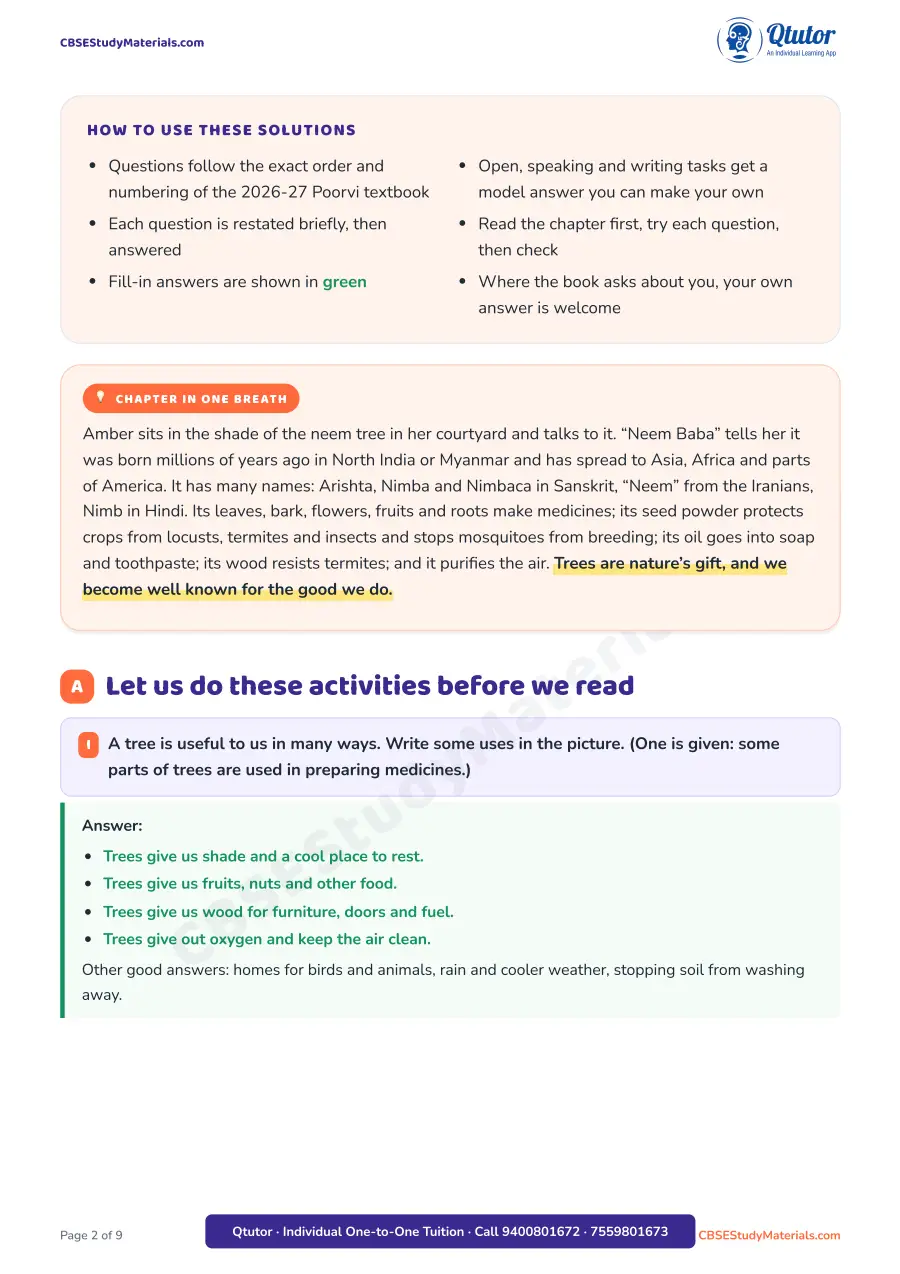
- Before we read: uses of a tree for the picture, and a sample "What do you know / What do you want to know" table about neem
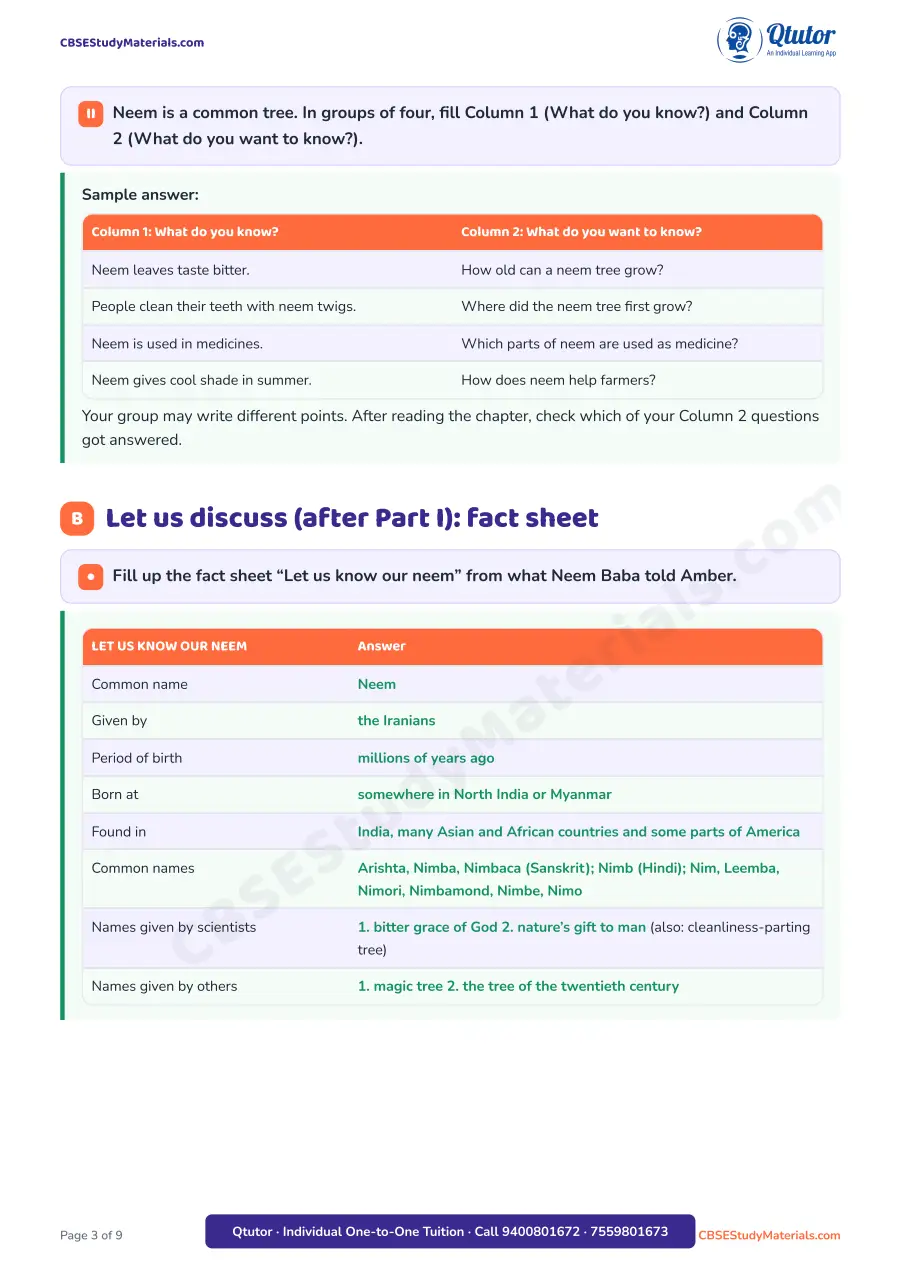
- Let us discuss (Part I): the completed "Let us know our neem" fact sheet, line by line
- Let us discuss (Part II): how neem is useful to farmers, and the uses of the neem tree
- Let us think and reflect: two surprising facts, all four fill-in sentences, the parts used in medicines and why the story of the neem tree is thought-provoking
- Let us learn: all nine compound words sorted into open, closed and hyphenated trees with extra words, the present-past verb matching with a sentence for each, and personification explained with examples
- Let us listen: each of the five Peepal Baba statements marked correct or not correct, with a reason checked against the transcript
- Let us speak: sample leaf cards and a model speech
- Let us write: a model paragraph about a tree with value points
- Let us explore: the meaning of Azad Darakhte Hindi and the Hindi name Nimb from the chapter, with a find-out table for the other names
Structure of the PDF
| Book section | Questions answered |
|---|---|
| A. Before we read | I (uses of a tree), II (know / want to know) |
| B. Let us discuss, Part I | Fact sheet |
| C. Let us discuss, Part II | 1, 2 |
| D. Let us think and reflect | I, II (1-4), III, IV |
| E. Let us learn | I (compound words), II (verbs), III (personification) |
| F-I. Listen, speak, write, explore | 5 statements, leaf cards, paragraph, names of neem |
Neem Baba Class 6 Important Topics Covered
- Neem's origin, spread and many names
- The uses of neem in medicine, farming and daily life
- Why neem leaves help a person with measles, and the warning about remedies
- Open, closed and hyphenated compound words
- Irregular past forms: became, found, made, told, gave (and the regular discovered)
- Personification
Neem Baba Class 6 Question Answers (Sample)
Complete: One reason why doctors advise us to use neem leaves for someone suffering from measles is ______. Answer: that neem leaves have chemical properties that destroy germs, so they give comfort from itching and do not allow germs to breed.
Which parts of the neem tree are used to make medicines? The leaves, bark, flowers, fruits and even roots.
The compound words from "Let us learn", as sorted in the solutions:
| Open | Closed | Hyphenated |
|---|---|---|
| neem oil, well known, seed powder, well trained | something, grandmother, childhood | cleanliness-parting, thought-provoking |
How These NCERT Solutions Help
- Same order and numbering as the textbook, so you can check homework line by line
- Fill-in answers are shown in green, so you can spot them at a glance
- Open questions get model answers plus value points or tips, so you learn how to write your own
- The model speech and model paragraph show the right format for speaking and writing tasks
How to Use These Neem Baba Solutions
Read the chapter once in your book, then try each question in your notebook before you look at the answer. Compare your answer with the solution and underline any key word you missed, such as "chemical properties", "breed" or "cost-effective". For the speaking and writing tasks, use the model only as a guide and write your own version about a tree you have really seen.
Who Should Use These Solutions
- Class 6 students using the NCERT Poorvi English book under the CBSE 2026-27 syllabus
- Students who want to check their exercise answers or prepare for a class test
- Parents and tutors who want accurate, well-explained answers to the whole chapter
How to Download the Neem Baba NCERT Solutions PDF
This is a premium PDF priced at ₹49. Use the download button below to get all 9 pages.
Neem Baba Class 6 English Chapter 7 NCERT Solutions PDF (PDF · 9 pages · ₹49)
Related Resources
- Class 6 English Chapter 7 Neem Baba Notes
- Class 6 English Chapter 7 Neem Baba Question Bank
- Neem Baba chapter page
- All Class 6 English study material
- Previous chapter: The Chair
- Next chapter: What a Bird Thought
FAQs on Class 6 English Chapter 7 Neem Baba NCERT Solutions
Where can I get Neem Baba Class 6 question answers PDF? On this page. The premium 9-page NCERT Solutions PDF costs ₹49 and covers every question in the chapter.
Are all the questions of Neem Baba answered in book order? Yes. All 16 questions and tasks follow the same order and numbering as the 2026-27 Poorvi textbook, from the activities before reading to "Let us explore".
How is neem useful to farmers, according to Neem Baba? Neem seed powder in water sprayed on plants keeps locusts away; in rice fields it stops mosquito breeding and helps increase crop yield; it also saves crops from termites and other insects.
Which statements are correct in the Neem Baba listening task? Statements 1, 3 and 4 are correct. The solutions give a reason for each of the five statements from the Peepal Baba audio.
Who wrote Neem Baba? The chapter is adapted from Neem Baba by S. I. Farooqi.
Study tip: try each question on your own first, then check your answer and read the value points to see what a full answer needs.